

Small Tackle Items

Disgorgers
Not every fish you catch will be nicely hooked in the lip. Some fish will gobble your hook bait down before you even see a bite, particularly Perch. A disgorger will enable you to remove an out of reach hook safely. The picture shows three different sizes of disgorger. The sizes that will be most useful to you as an angler will be the small and medium sized options.

Braid Blades, Clippers or Scissors
It can be tempting to use your teeth to do all things fishing, but don't. A good pair of Braid Blades will keep your dentist happy and your teeth in great shape. Normal scissors or nail clippers will do, but Braid Blades are small, sharp, and made for the job. Another item that is easily sourced from any tackle shop.
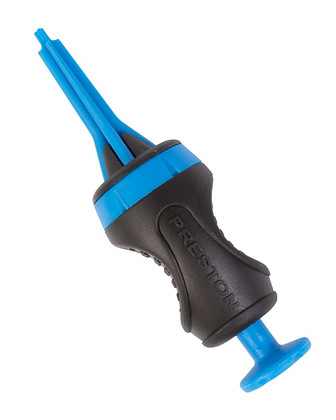
Pellet Bander
Much of modern fishing is all about hard pellets these days, and this little gadget is ideal for getting fiddley pellets inside tiny elastic bands. Slip the band over the ends of the prongs and depress the plunger. This opens up the band enough to pop a pellet inside. Release the plunger so the prongs trap the pellet, then slide the whole lot off the end. The pellet is now inside the band ready for hungry fish. Job done. A handy item to have for fumbling fingers.

Plummets
Used to find the depth of water you are fishing. A good Plummet will have a flat bottom that makes it more accurate. The hook is fed through the ring or hoop at the top, and then pushed into the soft material (usually rubber, foam, silicone, or cork). This stops the plummet from falling off and does not blunt the hook. A Plummet is used to feel for bumps and dips, soft and hard spots, as well as helping to find the depth. The picture shows 10g version, but a 20g Plummet is better for general purpose fishing.

Floats (Wagglers)
Of all the items of tackle you can buy, which float to choose is probably the most difficult choice you'll have to make. There are literally thousands of different shapes, weights, and colours of fishing floats. To start with, you only need be concerned with a couple of types of floats, commonly known as 'Wagglers'. For heavier baits like meat, corn, and large pellets, use a straight Waggler with a thicker tip. For more sensitivity and for lighter baits, use the thinner Insert Waggler. Which colour you use is up to you, most anglers go for red tips. But it's always handy to have a few yellow tipped Wagglers for certain conditions.
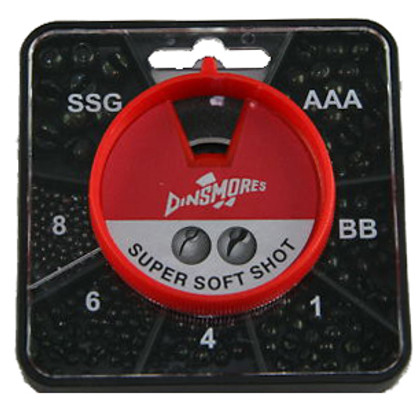

Split Shot & Stotz
Used to weight your float so that it sits right in the water, Split Shot is available is a multitude of sizes. The size of the shot is given by either a number or some letters. This will probably look like gibberish until you start using it and learn your 'Shotting Conversion Table'. The bigger the number, the smaller the shot. The shot with letters are the bigger sizes. It is important to remember that shot of size 8 and smaller, are still made from lead. Always use a set of pinchers or a specially made tool to fix shots to your line. These square shaped weights are a must have if you intend to catch Carp with a rod or a pole. When the line is stretched, they will not 'ping' off the line like small Split Shots can. This makes them perfect for making more delicate pole rigs in today's Carp driven world. They are also easier to attach to the line than shot, and they don't roll away when you're not looking! Only available up to size No.1.

Stotta or Pinchers
Mainly used to attach Stotz but can be used for shot too. Stotta's have a built in 'tooth' to open the Stotz/Shot to remove them. You may also need a small set of pinchers to attach the larger shots because these will not open wide enough. Flat, smooth Jewellers pinchers are ideal for this.
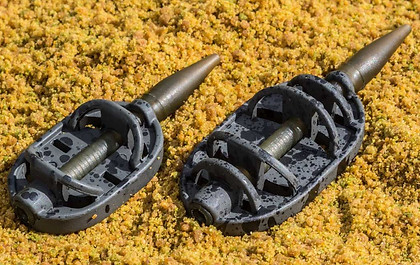
Method Feeders & Moulds
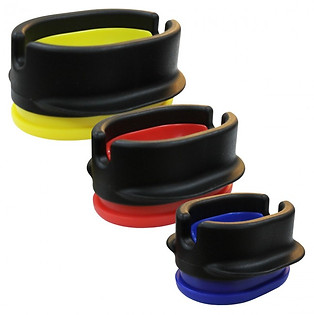
Definitely one of the easiest ways to catch fish, particularly Carp. A Method Feeder will deliver a parcel of bait to the bottom very close to the hook bait. There are many different manufacturers of Method feeders, and even more varieties. Some are more expensive than others and it is worth bearing in mind that new anglers will throw a few of these up trees to start with. Having said that, the higher end feeders will perform better and last longer. Look for feeders in the 15 to 30 gram bracket. The perfect companion to your Method feeder. Lots of different makes and options, so find one make and stick to it. It is important to match the make and size of your mould to your feeder so that it fits properly. Hook bait in first, fill the mould with soaked pellets, pop the feeder on top and push it into the pellets. Press the button on the back and out pops a perfectly formed pile of bait with the hook bait on the top ready for hungry fish.

Feeder Beads
Small and compact, feeder beads are a perfect way to attach your hook link to your main line. They are streamlined enough to avoid tangles and act as a 'buffer' for the feeder to rest against. If you want to change your hook for any reason, these beads make the job last only seconds. There are many different options in make, size, and colour. Go for the smaller sized beads if possible.


Hooks
Hooks are hooks, right? Wrong! As a beginner, you have a mind-blowing choice of ready tied hook links to choose from. Known as 'Hooks to nylon', they save you hours of work and possibly frustration at home. You might learn to tie your own hooks eventually and this will save you a lot of money in the long run. But, to start with, these are a God send! It is important to note that, on most fisheries that you will visit, it is almost certain that there will be a 'Barbless hook only' rule. This is the case on many local waters. Be sure that you have the correct type of hooks by only buying barbless hooks. The sizes of hooks are represented by numbers. The larger the number, the smaller the hook. As a beginner, hooks sizes of 14, 16, and 18 are going to be the most useful. You can go to a 12 in the summer or down to a 20 in the winter. But let's keep it simple for now. Which hooks you choose will depend mainly on the bait being used. For small soft baits like maggots, you will need a smaller hook, a size 16 or 18 is best. Look for the products labelled for 'Silverfish' or 'Maggot'. These will be perfect for the job. For slightly larger baits like Sweetcorn or Luncheon meat, look for products labelled 'Pellet' or 'Carp'. These will be tied to stronger line for the larger fish that these baits can attract. The above options of hooks so far will no doubt be of a flattened 'Spade End' variety using a special knot to tie them to the line. Sizes 16 or 14. To use the extremely popular hard pellets of modern fishing, you will need to buy a product known as 'Banded Hooks'. These are hooks with a wire 'eye' with which the hook is tied to the line. The Spade End hooks are just hooks. A Banded hook has a tiny rubber band tied into a loop, into which you will need to place a hard pellet using a Pellet Bander to make it easier. Banded hooks are most commonly used with the Method feeder. Look for 'Method Feeder Hook Links' in the shops. These are much shorter than other Hooks to Nylon coming in at no more than 10cm (4 inches), making them perfect for the feeder. Sizes 14 or 16. I am not going to get bogged down with which hooks are best. It doesn't matter that much to start with and, like many things in fishing, it can be a very personal choice. But the brands of Guru, Preston Innovations and Drennan all offer some of the most commonly used hooks to nylon, and the easiest to get hold of.